Amazon PPC
Amazon PPC for Beverage & CPG Brands (2026)
If you run a beverage or CPG brand on Amazon, you've probably hit this wall. The product's good, the listings are live, you're doing maybe $50K to $100K a month, and the account still isn't as profitable as you think it should be. Sales come in. Profit doesn't follow. This post is for that brand, the established consumables seller trying to get healthier, not the one still deciding whether to flip ads on.
Here's the thing about this category: the margin is tight from day one. You're not selling a $90 product with room to hide your mistakes. You're selling a drink, a powder, a snack, something people buy over and over. So the real question is pretty simple. How do you run Amazon PPC on a low-margin consumable without burning your whole margin just to land an order, and actually build repeat customers who come back?
Why is Amazon PPC so expensive for beverage and CPG brands?
Because you've got low order values and brutal competition at the same time, so every loose dollar of ad spend comes straight out of a margin that was already thin. The benchmarks back it up. In Trellis's 2026 category data, Sponsored Products clicks run roughly $0.85 to $1.30 across most categories, and food and beverage is one of the strongest-converting categories on Amazon, with grocery items often converting in the 15% to 20% range and fast-movers sometimes hitting 30% to 35%. Triple Whale's industry benchmarks put Food & Beverage among the lowest customer acquisition costs on the platform, around $11.38. That's the good news, and it's also exactly why everyone keeps bidding the category up.
The bottom line up front: Strong conversion doesn't automatically mean strong profit. If you're selling a $19.99 or $24.99 product, a decent conversion rate can still lose money once you stack up CPCs, coupons, FBA fees, and product cost. Profitable CPG advertising starts with the math, not the campaigns.
How do you make Amazon PPC profitable for beverage and CPG brands?
By treating Amazon as a customer-acquisition channel, not a first-order profit channel. The biggest mistake I see CPG brands make is judging Amazon on that first order alone. The owner looks at one transaction and asks, "Did we make money on that sale?" In a replenishment category, that's the wrong question. People buy consumables again and again. Roughly 40% of online grocery shoppers reorder every week, and across ecommerce, repeat shoppers spend about 67% more than first-time buyers. Price your ads against the first purchase only and one of two things happens: you overspend blindly because you have no clue what a customer is really worth, or you panic and kill campaigns the second first-order ACoS looks high.
Both reactions are wrong, and they come from the same blind spot. Most beverage and CPG brands aren't losing money because PPC doesn't work. They're losing money because they don't know what a new customer is worth over time. That's the whole game here. PPC only works when the math behind the first order and the repeat purchase is built into the strategy from the start.
What's the biggest Amazon PPC mistake beverage and CPG brands make?
Chasing the biggest, broadest category terms before they've proven the economics. Take a hydration drink mix brand we worked with, selling an oral rehydration salt. Real product, real use case, but a crowded category with much bigger brands outspending them on everything around hydration, electrolytes, and recovery. The tempting move is to go straight for the giant terms: "electrolyte powder," "hydration packets," "sports drink mix." Tons of volume, sure, but expensive and way too broad. Whoever's typing those is still comparing a dozen products and hasn't committed to anything.
What actually worked was the opposite. We went after the hyper-specific, high-intent term. "Oral rehydration salts" is a smaller search, but the person searching it already gets the category and knows exactly what they want. That product showed up at the top of search almost right away, inside the first week, in a brutally competitive space. So the lesson isn't that broad keywords are always bad. The lesson is sequence. On a lower-AOV consumable, you don't spend hard on the biggest traffic until you know the listing converts, the margin can handle the click cost, and there's a real repeat-purchase path. Start with the most qualified demand, prove the economics, then expand.
How should you set up Amazon PPC for a beverage or CPG brand?
Run it in one order, top down: Economics, then Offer, then Structure, then Intent, then Repeat Purchase, then Scale. Most brands run it backwards and start with scale, and that's exactly why the account gets messy and the margin quietly disappears.
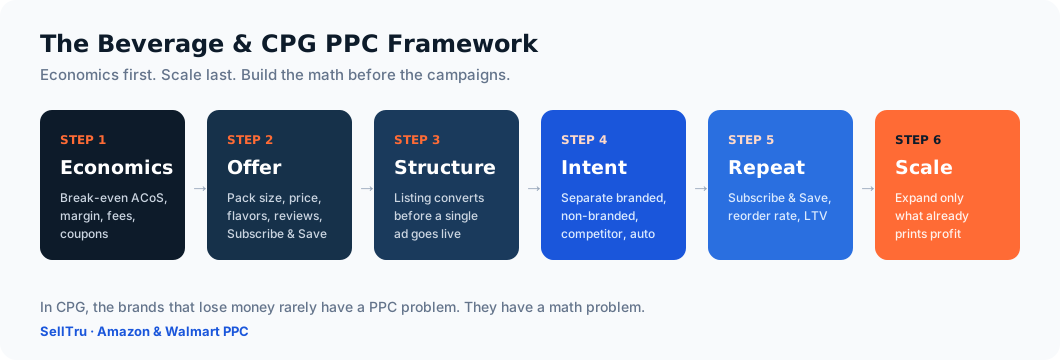
- Economics. Before you touch a campaign, know your numbers cold: break-even ACoS, target margin, product cost, FBA and referral fees, shipping weight, coupon strategy, and what Subscribe & Save does to your profit per order. If you don't know what you can afford to pay for a customer, running ads is just guessing.
- Offer. In CPG you live and die by the offer. Pack size, price, flavors, reviews, images, bundles, subscription value, all of it decides whether traffic converts. Audit every one of those before you spend a dollar sending people to the page.
- Structure the listing to convert. Main image, secondary images, A+ content, it all has to be dialed in first. A listing that actually converts is the prerequisite, not the afterthought. Ads can't fix a page that doesn't sell.
- Separate traffic by intent. Never dump branded, non-branded, competitor, and auto into one bucket. Split the account out: branded defense, high-intent non-branded keywords, competitor ASIN targeting, category and product targeting, and tightly controlled auto and broad research campaigns. Each one has a different job and a different cost you'll accept.
- Build for repeat purchase. Layer in Subscribe & Save and reorder campaigns wherever they fit. This is where consumables actually make their money, and it's the piece most accounts skip entirely.
- Scale the winners. Only scale the search terms, ASIN targets, and traffic sources that have already proven they make money. Scale the behavior that's working, not a whole campaign just because the totals look fine.
What do most agencies get wrong about beverage and CPG PPC?
They treat a CPG account like any other ad account. In a less competitive category you might get away with that. In beverage and consumables the space is too crowded and the margins too thin. The typical agency walks straight into the PPC dashboard, starts moving campaign structure around, and watches ACoS and ad sales, without ever looking at the economics behind the product. Honestly, if an agency dives into your account and starts changing things before they understand your margin, that's a red flag.
A better approach looks at the whole Amazon profit system the way an owner would. Where are you making money, and where are you burning it? That means knowing your margin, your break-even ACoS, your target ACoS, your reorder rate, and your Subscribe & Save strategy before you build a single campaign around buyer intent, and watching ACoS and contribution margin together instead of chasing a smaller number on its own. The same margin-first thinking carries over to other low-AOV categories, which is why it lines up with how we run PPC for supplement brands.
What's a good ACoS for a beverage or CPG brand?
There's no universal answer, and any agency that hands you one without looking at your numbers is guessing. A 35% ACoS might be perfectly healthy for one product and a loss on every single order for another. It comes down to your margin, pack size, price, FBA fees, coupon strategy, Subscribe & Save discount, and reorder behavior. The number I actually care about is your break-even ACoS, because that's the line between making money and losing it. Until you know that number, arguing over whether 35% is good or bad is pointless.
One more spot where brands fool themselves: Subscribe & Save. A 5% or 10% discount can drive real repeat purchase, but it isn't free, and it has to go into your margin model. Adoption's high here, Red Stag's data shows around 55% of grocery shoppers use it, but the program's growth slowed to about 11.3% year over year in 2024 and lost share in nine of the top ten CPG categories, according to a Velocity Sellers analysis. So treat it as a margin decision, not free upside.
What else do beverage and CPG brands ask about Amazon PPC?
What's a good ACoS for a beverage or CPG brand on Amazon?
There's no single number. It depends on your margin, price, pack size, coupon and Subscribe & Save strategy, and reorder rate. Work out your break-even ACoS first, then judge every campaign against what you can actually afford to pay for a customer who's likely to come back.
Should I bid on broad category keywords for a new CPG product?
Not first. Broad terms like "electrolyte powder" or "protein snack" are expensive and packed with comparison shoppers. Start on hyper-specific, high-intent terms where the shopper already knows what they want, prove the listing converts and the margin holds, then push into broader traffic once the economics are proven.
How does Subscribe & Save affect my Amazon PPC profitability?
It lifts customer lifetime value but cuts your margin per order through the discount. For consumables that's usually a good trade, since repeat buyers spend far more over time, but only if you build the discount into your break-even math instead of treating it as free upside.
Do beverage and CPG brands need an agency to run Amazon PPC?
Not necessarily, but the category is competitive and margin-sensitive enough that structural mistakes get expensive fast. If you want a second set of eyes, our Amazon PPC service for food and beverage brands covers exactly this: margin-first structure, Subscribe & Save strategy, and seasonality planning built into the campaign from day one.
So here's where it lands. In beverage and CPG you can have a product that sells and still watch PPC quietly bleed the business dry if you manage to ad sales instead of margin. Get the math right first, split traffic by intent, plan for the repeat purchase, and only scale what's already profitable. The brands losing money in this category usually don't have a PPC problem. They have a math problem.
Find out if your CPG ads are building profit or just buying orders
We'll audit your beverage or CPG account and show you whether your PPC is creating profitable repeat customers or just buying expensive one-time orders. We review break-even ACoS, wasted broad and auto spend, Subscribe & Save economics, and high-intent keyword opportunities before you spend another dollar scaling.
Get a Free AuditHave experience with this? The SellTru blog accepts guest posts from Amazon sellers, agency pros, and ecommerce operators. See our submission guidelines →