Amazon PPC
Amazon Sponsored Display Ads: Worth It in 2026?
Sponsored Display is the middle child of Amazon advertising. Sponsored Products gets all the budget, DSP gets all the mystique, and Sponsored Display sits in between — misunderstood, half-configured, and abandoned after one bad week of ACoS. That's a mistake. Used correctly, Sponsored Display is the only self-serve tool in Seller Central that lets you retarget shoppers who viewed your listing and didn't buy — and for most brands under eight figures, it's the right answer to "should we be running DSP?"
What Sponsored Display Actually Is
Sponsored Display lives inside Seller Central alongside your other campaigns, requires Brand Registry, and is billed per click (with a viewable-impression vCPM option for awareness campaigns). Your ads show on product detail pages, in customer review sections, and — this is the part most sellers miss — off Amazon entirely, across Amazon's audience network on third-party sites and apps. It's the only Seller Central ad type that follows shoppers off the platform.
There are two targeting families, and they behave like completely different products:
- Contextual targeting — you target products or categories, and your ad shows on those detail pages. Functionally similar to product targeting in Sponsored Products, but with different placements and usually cheaper clicks.
- Audience targeting — views remarketing (shoppers who viewed your listing or similar listings and didn't purchase), purchases remarketing (past buyers — the repeat-purchase play for consumables), and Amazon's built-in audiences (in-market and lifestyle segments).
Sponsored Display vs. DSP: The Question Everyone Actually Has
Most sellers asking about Sponsored Display are really asking whether they need DSP. The honest answer: DSP is the full programmatic platform — deeper audience controls, CPM billing, video and audio inventory, reach across the open web. It's also typically a five-figure monthly commitment before it generates enough data to optimize. We broke down the whole platform in our Amazon DSP guide, but the short version is: Sponsored Display is DSP's training wheels, and training wheels are exactly what most brands need. No minimums, no managed-service contract, and 80% of the retargeting value.
The rule we use: run Sponsored Display retargeting until it consistently spends its budget with acceptable TACoS impact. When you're capped out and still hungry for audience reach — that's when a DSP conversation makes sense. Not before.
The Campaigns Worth Running
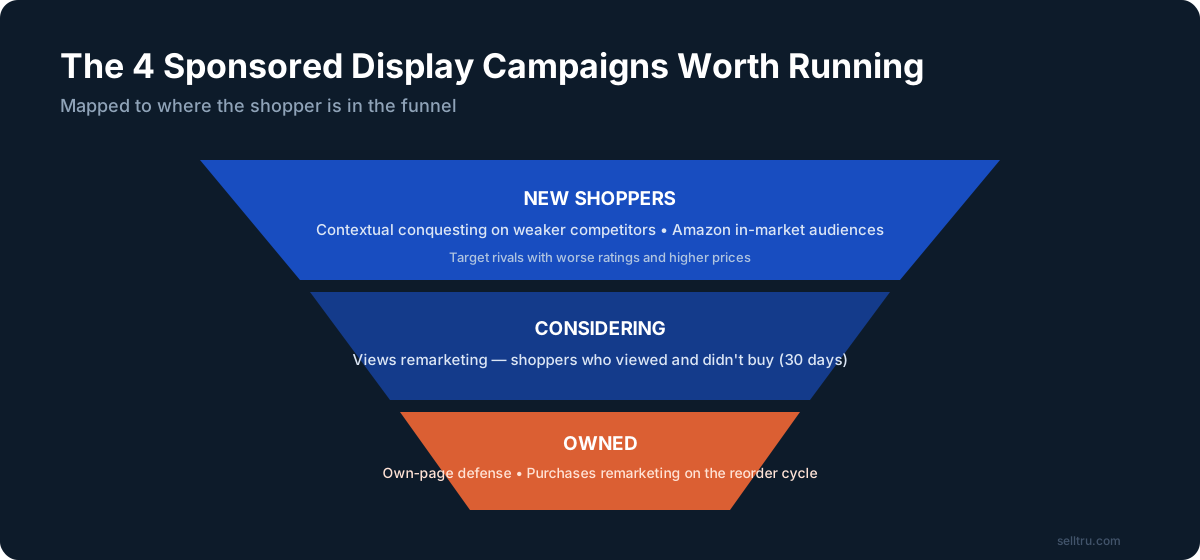
1. Views remarketing on your own listings. The default starting point. A shopper compared you against three competitors and bought nothing — a views remarketing ad puts you back in front of them for the next 30 days while they decide. High-consideration and high-priced products benefit most, because the gap between first view and purchase is longest.
2. Purchases remarketing for consumables. If you sell supplements, food, pet products — anything bought on a cycle — targeting past purchasers around the reorder window is some of the cheapest, highest-converting spend available in Seller Central.
3. Contextual defense on your own detail pages. Your product pages show competitor ads on them right now. Sponsored Display contextual campaigns targeting your own ASINs push competitors out of those placements. Cheap insurance.
4. Contextual conquesting on weaker competitors. Same logic as the product targeting play from our Sponsored Products vs. Sponsored Brands comparison: target competitors with worse ratings and higher prices, where a shopper seeing your offer has a real reason to switch.
Settings That Actually Matter
Three decisions determine most of your results before the campaign even runs. First, bid optimization: "optimize for conversions" is the right default for remarketing and conquesting; "optimize for reach" only makes sense for vCPM awareness pushes with a specific goal. Second, creative: upload your logo and write a custom headline — the auto-generated version pulls your product title and looks like every other ad on the page. Third, the lookback window on views remarketing: 30 days is the default and usually right, but for expensive, long-consideration products, test the longer windows. A shopper researching a $300 product is still deciding at day 45.
Why Sellers Quit Sponsored Display Too Early
Two reasons, both fixable. First, they launch with Amazon's default settings — broad audiences, "optimize for reach," no bid control — burn a week of budget, and conclude the ad type doesn't work. Start with tight views remarketing, bid optimized for conversions, and expand from there.
Second, they judge retargeting with the same ACoS lens as a Sponsored Products exact-match campaign. Retargeting sits at the end of a journey that other campaigns started, and last-click attribution gives it credit accordingly — sometimes flattering, sometimes not. Click costs across Sponsored Display have also swung hard in 2026 as budgets migrate between ad types, which makes single-week ACoS reads even less reliable. This is the same argument we make in our TACoS breakdown: judge the account's total ad spend against total revenue, and judge Sponsored Display by what happens to repeat purchase rate and conversion on retargeted traffic over 30–60 days — not by one campaign's ACoS in isolation.
The bottom line: Sponsored Display is the cheapest way on Amazon to stop paying for a shopper's attention once and losing them forever — treat it as your retargeting layer, not another keyword campaign, and it earns its budget.
Is Your Retargeting Layer Missing?
Most accounts we audit run zero Sponsored Display — which means every shopper who viewed and didn't buy is gone for good. We'll show you what that's costing.
Get a Free AuditHave experience with this? The SellTru blog accepts guest posts from Amazon sellers, agency pros, and ecommerce operators. See our submission guidelines →