Amazon Strategy
How to Drive External Traffic to Amazon in 2026
At some point, every brand on Amazon hits the same ceiling: you own your keywords, your PPC is dialed in, and growth flattens — because you're only fishing in Amazon's pond. The next lever is traffic Amazon doesn't control: Google, TikTok, influencers, your email list. Most sellers either ignore external traffic entirely or do it so carelessly they lose money on every click. The difference between those outcomes is about an hour of setup.
Why Amazon Pays You to Do This
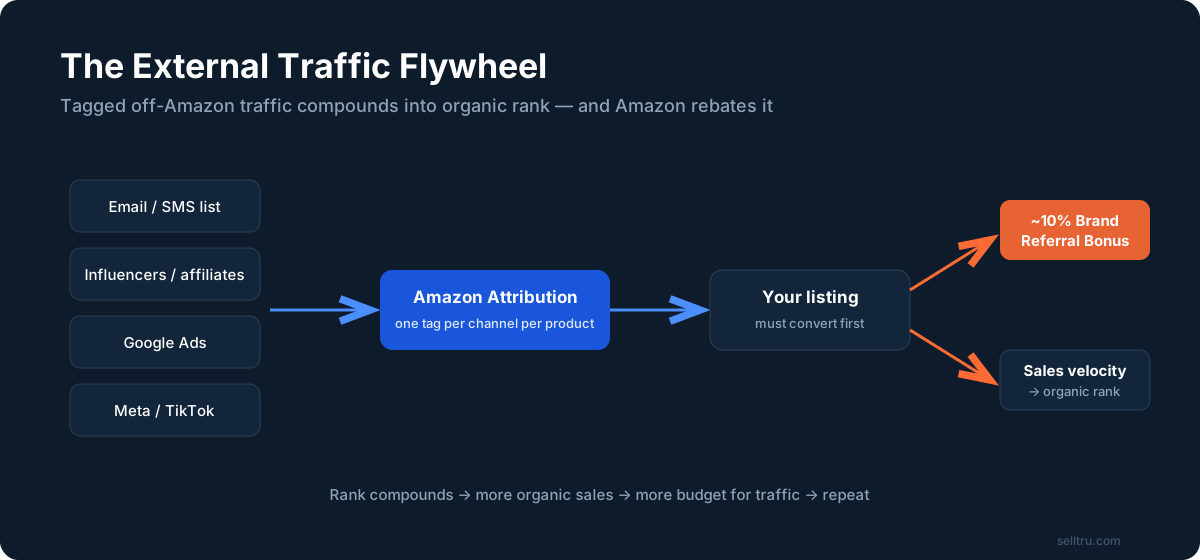
Amazon wants your off-platform traffic badly enough to subsidize it. The Brand Referral Bonus credits back an average of roughly 10% of sales driven by external traffic — the exact rate varies by category — as a credit against your referral fees. Send $50,000 of externally-driven sales through properly tagged links and Amazon hands back around $5,000 you were already going to pay in fees.
The two requirements: you must be enrolled in Brand Registry, and the traffic must run through Amazon Attribution tags. Untagged external traffic earns nothing and — worse — teaches you nothing.
Enrollment takes minutes: the Brand Referral Bonus page in Seller Central shows your category's exact rate before you commit to anything, so check your number first — high-fee categories generally see the richest rebates, and the math changes channel by channel.
The second payoff is bigger than the rebate. External traffic that converts feeds the same flywheel we describe in every post on this blog: sales velocity drives organic rank, and organic rank drives the sales you don't pay for. Amazon's algorithm rewards listings that bring shoppers onto the platform. A launch supported by external traffic ranks faster than a launch running PPC alone — and the on-page fundamentals from our Amazon SEO guide determine how much of that velocity you keep.
Set Up Amazon Attribution Before You Spend a Dollar
Amazon Attribution lives in the Amazon Ads console and generates tagged URLs that track clicks, detail page views, add-to-carts, and purchases from your external campaigns. Create one tag per channel per product — not one tag for everything. "Facebook sent 2,000 clicks and 11 orders, TikTok sent 900 clicks and 32 orders" is a decision. One blended number is a shrug.
Give each tag two weeks of data before judging it, and read the full funnel, not just purchases: clicks tell you the creative worked, detail page views against clicks tell you the audience was real (a big gap means bot traffic or accidental clicks), and add-to-carts tell you the listing is doing its job. A channel with strong add-to-cart rates and weak same-window purchases is often converting later through branded search — that's a keeper, not a failure.
The Channels, Ranked by How Often They Actually Work
1. Your email and SMS list. The cheapest clicks you'll ever send. If you have a list from your DTC site, a tagged Amazon link in a launch or deal announcement is free money — bonus-eligible, rank-driving, and zero acquisition cost.
2. Influencer and affiliate traffic. Pre-warmed audiences convert. A creator whose audience trusts them sends traffic that behaves like branded search. Tag every creator separately so you know who actually drives orders instead of views.
3. Google Ads on branded and category terms. Shoppers searching Google for your product category are already in buying mode. Branded terms defend your name; category terms are a volume play that needs margin to support the CPC. Test small.
4. Meta and TikTok paid traffic. The hardest to make profitable, because you're interrupting people who weren't shopping. It works for demonstrable, impulse-friendly products with strong creative — and it's where untagged, unmeasured spend goes to die. This is the channel where the Brand Referral Bonus most often flips the math from break-even to profitable.
The Mistakes That Burn the Budget
Sending cold traffic straight to a weak listing. External clicks land on the same detail page as everyone else. If your listing converts at 8%, external traffic will convert worse — the listing has to be ready before the traffic arrives.
Skipping the tags. No Attribution tag means no bonus, no data, and no way to know whether the campaign worked. There is no version of external traffic done right without it.
Judging it like PPC. External traffic converts below Amazon PPC on a last-click basis — shoppers click, browse, and buy two days later from a branded search. Some of that conversion credit lands on organic. Which is exactly why we grade external campaigns the way we grade everything: total revenue impact and TACoS trend, not the attribution dashboard alone.
Scaling before the math works at small spend. Run $500 through a channel before you run $5,000. The tag data will tell you which channel deserves the budget.
The bottom line: external traffic is the only growth lever on Amazon your competitors can't bid against — tag it, aim it at a listing that converts, and let the rank compound.
Growth Amazon Can't Sell You
We'll audit your listing conversion, Attribution setup, and Brand Referral Bonus eligibility so every external click you pay for actually compounds.
Get a Free AuditHave experience with this? The SellTru blog accepts guest posts from Amazon sellers, agency pros, and ecommerce operators. See our submission guidelines →