Amazon Strategy
Amazon Brand Registry: Why It Matters in 2026
Somewhere on Amazon right now, a seller with no relationship to your brand is copying your listing photos, shaving two dollars off your price, and hoping shoppers won't notice the difference. Without Amazon Brand Registry, there's almost nothing stopping them — and very little you can do about it once they're live on your listing.
We bring this up constantly with brands we onboard, because it's one of the most common gaps we find in account audits: a seller doing real revenue on Amazon who still hasn't enrolled in Brand Registry, or enrolled years ago and never used what it unlocked. Here's what it actually is, why it matters more in 2026 than it used to, and how to get approved without wasting weeks on a rejected application.
What Is Amazon Brand Registry?
Amazon Brand Registry is a free program that gives verified brand owners direct control over how their products are represented on Amazon. It's not a marketing tool by itself — it's the gatekeeper that unlocks the marketing and protection tools that actually move the needle.
To enroll, you need an active, registered trademark for your brand name (a word mark, not just a design or logo mark) that matches the products you're selling. Amazon verifies the trademark against government trademark offices, then confirms you're the rightful owner through a short verification process — usually a code sent to the email or phone number on file with the trademark, or a code printed on your product or packaging.
Eligibility in one sentence: you need a registered (or Amazon IP Accelerator-backed pending) trademark that matches your brand name, plus a Seller or Vendor Central account under the same legal entity that owns the mark.
What Brand Registry Actually Unlocks
Once you're enrolled, a long list of tools that unregistered sellers simply cannot access becomes available. The two categories that matter most are growth tools and protection tools.
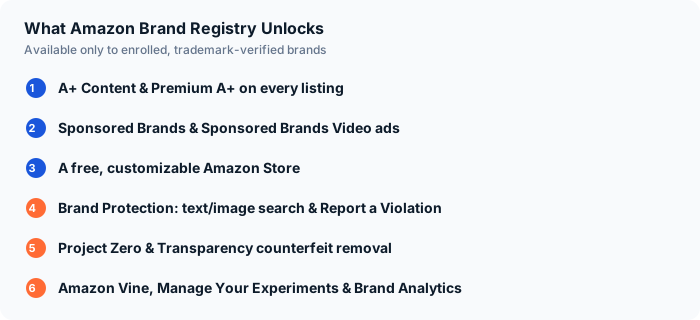
On the growth side, Brand Registry unlocks A+ Content (including Premium A+), Sponsored Brands and Sponsored Brands Video ad formats, a free customizable Amazon Store, Amazon Vine for early review generation, Manage Your Experiments for listing A/B tests, and full access to Brand Analytics — the search term and market basket data that has no substitute anywhere else.
On the protection side, you get text and image search across the entire Amazon catalog to find anyone using your brand name or photos without permission, a direct Report a Violation channel that gets counterfeit and hijacked listings removed far faster than a standard complaint, and — for brands that qualify — enrollment in Project Zero and Transparency, which let you remove counterfeits and authenticate units without waiting on Amazon's internal review queue at all.
How to Get Approved
The process itself is straightforward once your trademark is in order. Here's the sequence we walk clients through:
1. Confirm your trademark status. You need an active, registered word mark — not a pending application, unless you're going through Amazon's IP Accelerator program with one of their vetted trademark attorneys, which allows enrollment before full registration completes.
2. Match your legal entities. The name on the trademark registration and the name on your Seller or Vendor Central account need to line up. Mismatches here are one of the most common causes of rejected applications.
3. Apply through Seller Central. Go to Brand Registry and submit your trademark's registration number, along with images of your product, packaging, and labeling that show the brand name in use.
4. Verify ownership. Amazon sends a verification code to the contact listed on the trademark registration — usually by phone or email. Enter that code to complete enrollment.
Once your trademark is fully registered, approval typically takes one to three business days. If you're enrolling through IP Accelerator on a pending mark, plan for longer, since Amazon has an extra layer of verification to run.
What Most Sellers Get Wrong
The biggest mistake is timing. Sellers wait until they've already been hijacked or counterfeited to start the trademark and registration process — at which point it's too late to use Brand Registry's fastest protection tools for that specific incident. Brand Registry should be treated as a launch-phase task, not a damage-control task. If you're planning to launch a new product on Amazon, file your trademark and start your Brand Registry application before your first unit ships.
The second mistake is filing the wrong kind of trademark. A design mark that covers your logo doesn't qualify you for Brand Registry — you need a word mark on the brand name itself. We've seen sellers spend months and real legal fees on a trademark that Amazon won't accept, simply because nobody checked the mark type before filing.
The third mistake is enrolling and stopping there. Brand Registry is an unlock, not a finish line. We regularly audit accounts that have been enrolled for years but never built a Store, never turned on Sponsored Brands, and never touched Brand Analytics — leaving real growth on the table because nobody came back to actually use what enrollment opened up.
A Real Example
We took over an account for a home goods brand that had been fighting the same counterfeit seller for months, filing standard infringement complaints that Amazon was slow to act on. The brand wasn't enrolled in Brand Registry. Within a week of getting them registered and verified, we filed through Project Zero instead of the general complaint form — the counterfeit listing came down within 24 hours instead of the two-to-three-week cycle they'd been stuck in. That's the difference enrollment makes when it actually matters.
Brand Registry doesn't cost anything but time, and the tools it unlocks — from A+ Content to Project Zero — are the foundation almost every other Amazon growth strategy sits on top of. If you're not enrolled yet, or you enrolled years ago and never used what came with it, that's worth fixing before anything else on your account. For a broader look at getting a listing launch-ready, see our complete Amazon listing optimization guide.
Not Sure If You're Using Brand Registry Right?
We'll check your enrollment status, your protection settings, and whether you're actually using the tools it unlocks — free, with no obligation.
Get a Free AuditHave experience with this? The SellTru blog accepts guest posts from Amazon sellers, agency pros, and ecommerce operators. See our submission guidelines →